
The kingdom of God
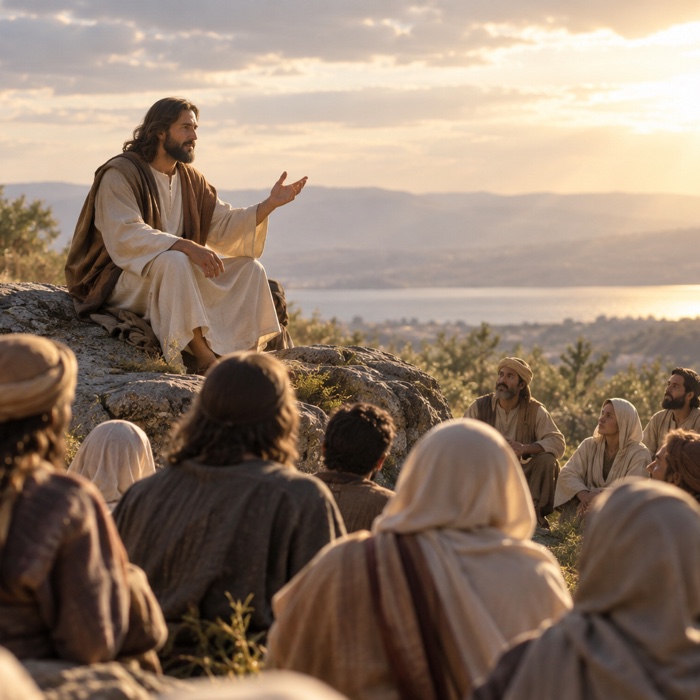
The most frequent subject of his preaching: God’s reign arriving, described almost always in pictures rather than definitions.
Mark 1Matthew 13
Education
Explore. Learn.Grow in the Word.
Explore Scripture, its story, its people, and what it means for life today.
At the center
Eight moments the Gospels return to, in the order they tell them.
Bethlehem
Born in Judea under Roman rule, into an ordinary family in a small town.
The Jordan
Baptised by John, marking the beginning of his public ministry.
Galilee
Roughly three years of teaching and healing, mostly around the lake and its towns.
Throughout
Short stories about ordinary things — seed, debt, a lost sheep — used to describe the kingdom of God.
Throughout
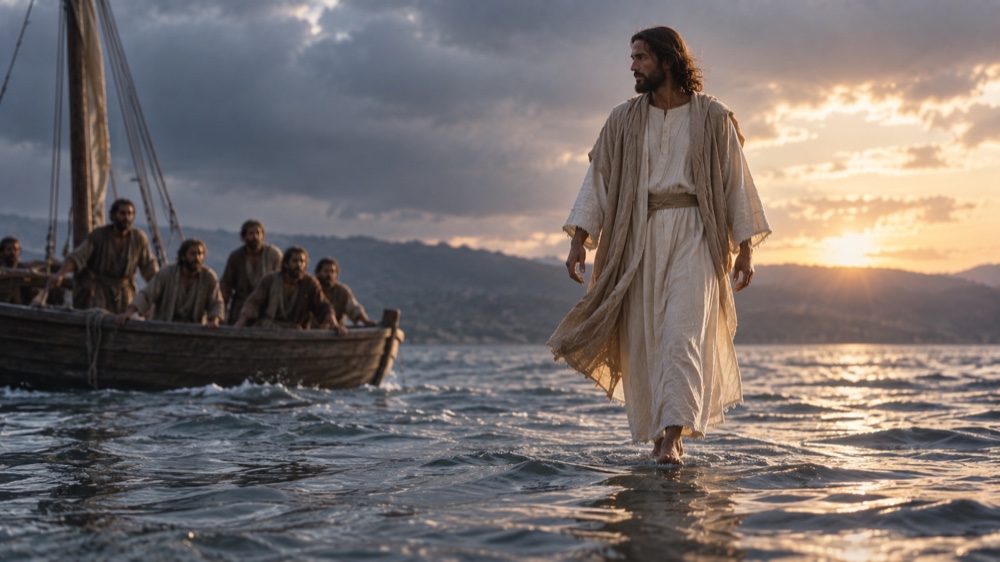
The Gospels record healings, feedings, and calming of a storm, presented as signs rather than spectacle.
Judea
He enters the city at Passover, confronts the temple authorities, and shares a final meal with his disciples.
Golgotha
Arrested, tried, and executed by Roman crucifixion — a death the Gospels narrate plainly and without spectacle.
Jerusalem
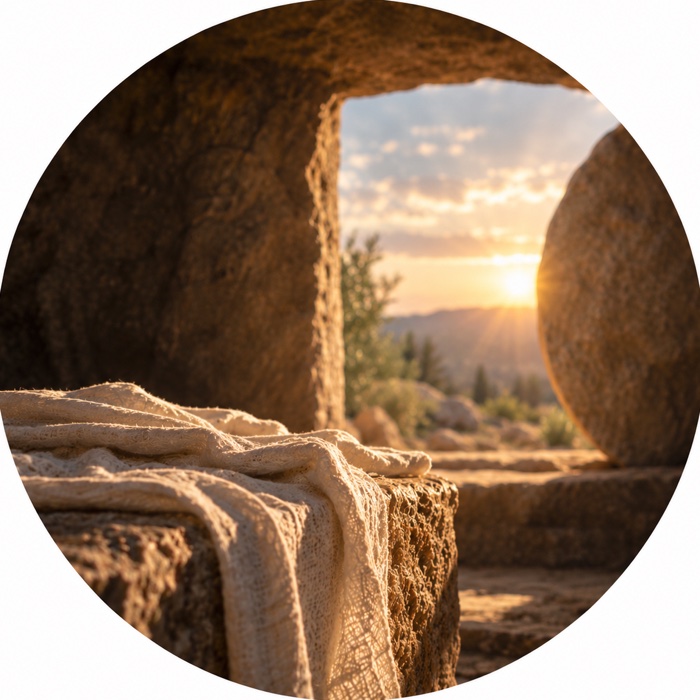
His followers testify that the tomb was empty and that they saw him alive. Everything after this point in the New Testament proceeds from that claim.
What he taught
The Gospels do not present a syllabus. These are the themes that recur, not a system arranged for him.
“And he went about all the cities and villages, teaching…”
Matthew 9:35
The most frequent subject of his preaching: God’s reign arriving, described almost always in pictures rather than definitions.
Mark 1Matthew 13
Short stories drawn from farming, money and family life. They invite the hearer to work something out rather than handing it over.
Luke 15Matthew 13
A sustained block of teaching on anger, honesty, money, worry and prayer, ending with a warning about hearing without doing.
Matthew 5–7
Asked to name the greatest commandment, he gives two and refuses to separate them.
Mark 12Luke 10
Treated as something the forgiven owe onwards, not a private transaction — a point several parables press hard.
Matthew 18Luke 7
A recurring and uncomfortable theme, especially in Luke, where possessions are treated as a spiritual risk.
Luke 6Luke 16
Handled indirectly for much of the Gospels — questions, titles and actions more than announcements.
Mark 8John 8
The miracles
The Gospels report these plainly and without embellishment, and John calls them signs — pointers to something rather than demonstrations for their own sake.
“These are written that you may believe that Jesus is the Christ, the Son of God…”
John 20:31
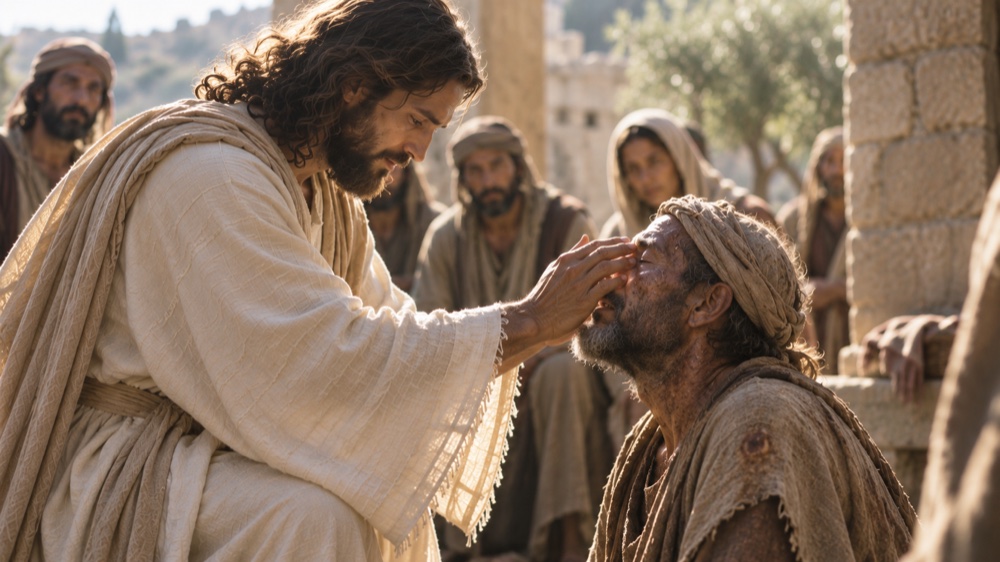
The largest group by far — illness, blindness, paralysis, leprosy. Often accompanied by touch, and often of people the community kept at a distance.
Mark 1–2Luke 17
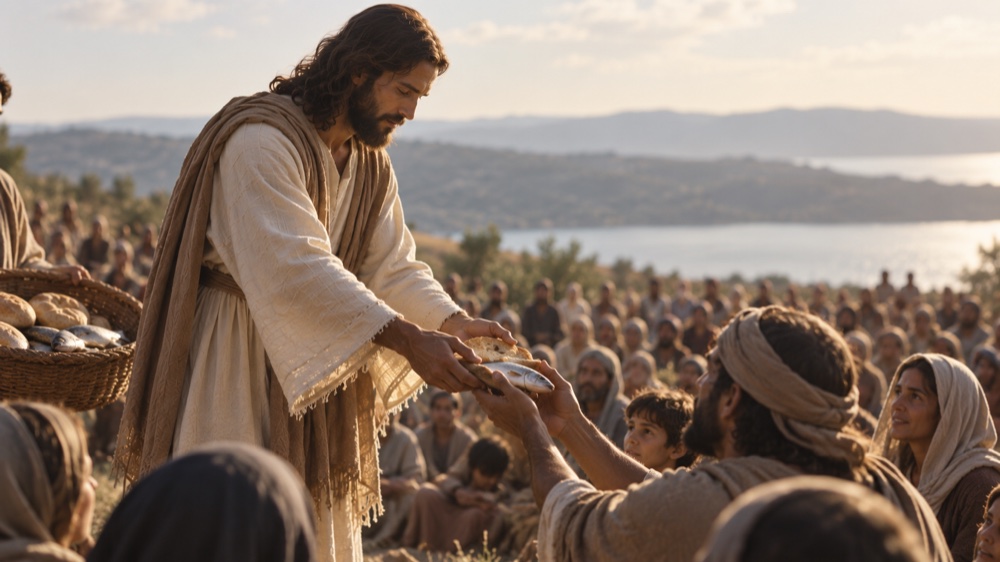
Crowds fed from almost nothing, told in all four Gospels — the only miracle besides the resurrection that all four include.
Mark 6John 6
A storm stilled, water walked on. Told sparingly, and usually followed by the disciples asking who he is.
Mark 4Matthew 14
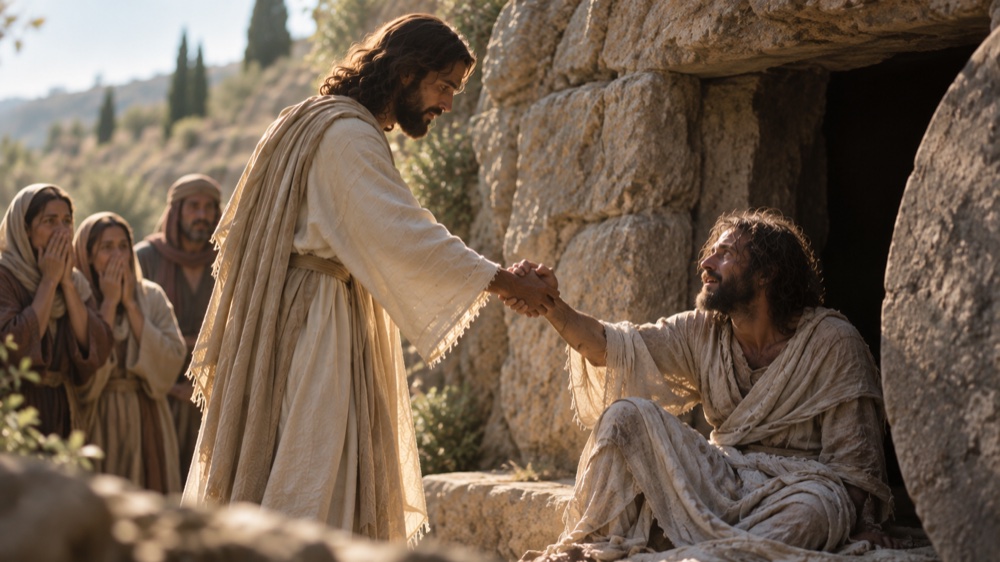
Three accounts: a girl, a widow’s son, and Lazarus. Each is presented as a return to ordinary life rather than an escape from death itself.
Mark 5Luke 7John 11
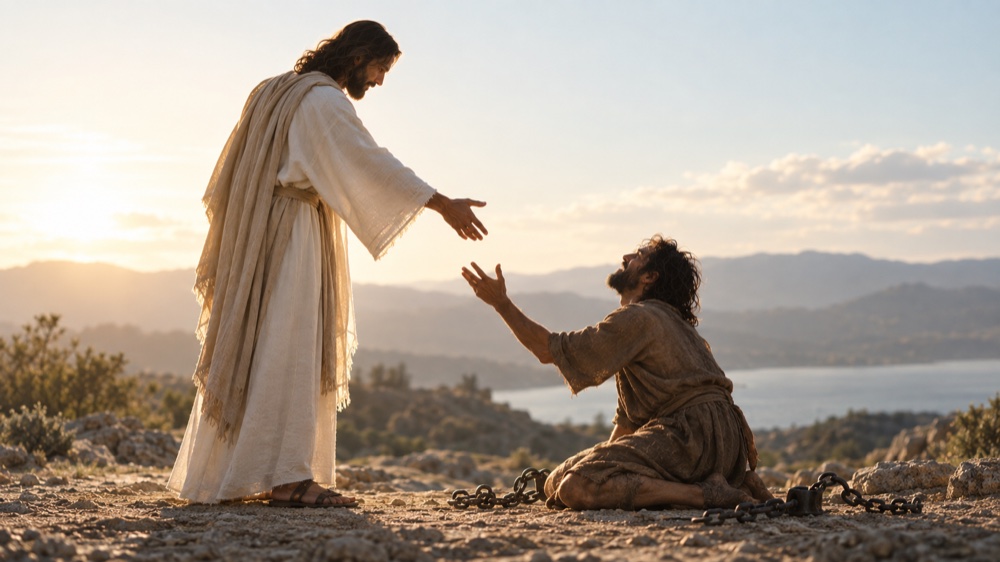
Accounts of people freed from what the Gospels describe as unclean spirits, generally ending with the person restored to their community.
Mark 5Luke 8
Go deeper
Longer answers, written to be honest about where the ground is firm and where it is contested.
A Jewish man from Galilee who taught, healed, gathered followers, and was executed by Roman authority in Jerusalem, most commonly dated to around AD 30–33. That much is accepted by essentially all historians who work on the period, including those who hold no Christian belief; Roman and Jewish writers of the following century mention him.
What he was beyond that is the question the Gospels are written to press. The church has confessed since its earliest creeds that he is fully God and fully human — one person, two natures — a formulation hammered out over centuries of argument and settled in its classic form at Chalcedon in 451.
Mark 8John 1Colossians 1
Mostly the kingdom of God, mostly in parables. The Gospels record short stories about seed, debt, lost animals and family quarrels, used to describe what God’s reign is like and who it is for.
Alongside that runs a body of teaching on how to live: anger, money, honesty, prayer, forgiveness, and the treatment of the poor. The Sermon on the Mount collects much of it. He is remembered as teaching with an authority his hearers found unusual, and as reserving his sharpest words for the religiously confident.
Matthew 5–7Mark 4Luke 15
Historically: he was executed by the Roman prefect Pontius Pilate, by crucifixion, a penalty Rome used for sedition and for the lowest classes. The Gospels present the immediate cause as a collision with the temple authorities during Passover week and a political calculation by Pilate.
Theologically, Christians have never treated it as only a miscarriage of justice. The New Testament writers say he died for sins, in our place, willingly. Different traditions have emphasised different aspects of what that accomplished — a ransom, a victory, a substitution, an example — and the church has never made one explanation the single official one.
Mark 15Isaiah 53Romans 51 Peter 2
This needs three separate sentences, because they are three different kinds of claim.
What the New Testament says: that Jesus was buried, that the tomb was found empty by women among his followers, and that he appeared alive to individuals and to groups. Paul, writing to Corinth within a few decades of the events, cites a list of witnesses and says most of them were still living.
What historical work can establish: that Jesus was crucified, that his followers very soon afterwards were convinced they had seen him alive, and that this conviction — not a gradual legend — is what the movement started from. Historians who agree on those points still divide sharply over what explains them, and the resurrection itself is not the kind of claim historical method can settle either way.
What Christians believe: that God raised him bodily from the dead, and that this is the ground of everything else the faith says. Mt. Pleasant holds that belief. This page does not pretend it is a neutral conclusion that the evidence forces on everyone.
1 Corinthians 15Luke 24John 20
Earlier and higher than is often assumed. The material Paul quotes in 1 Corinthians 15 and Philippians 2 is widely regarded by scholars as older than the letters themselves — creedal or hymn-like fragments already in circulation — and it speaks of Jesus in language reserved for God.
That said, the precise vocabulary took centuries to settle. The debates that produced the Nicene Creed in the 4th century were real debates among people who all considered themselves Christians. Saying the belief was early is not the same as saying the definitions were finished, and this page tries not to blur the two.
1 Corinthians 15Philippians 2John 1